

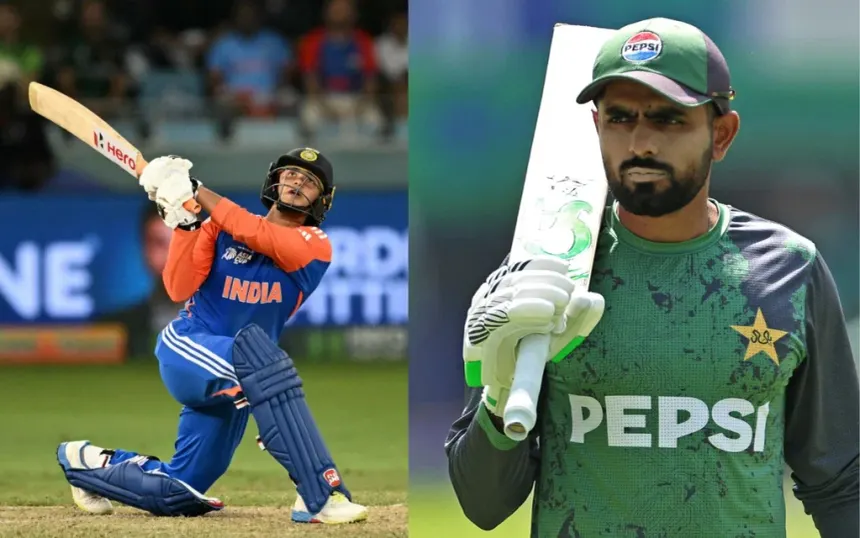
The latest ICC Men’s T20I rankings brought a major shake-up this week, with Pakistan’s Babar Azam surging nine places up the batting charts while India’s Abhishek Sharma retained his position as the world’s No. 1 T20I batter. The update reflects both a resurgence from one of modern cricket’s most consistent performers and the continued dominance of a new-generation star redefining India’s approach to T20 batting.
For Babar, this leap marks a strong return to form after months of inconsistency. The former Pakistan captain, who had slipped out of the top ten earlier this year, found his rhythm in recent series, producing steady innings and regaining the fluency that once made him a fixture among the world’s best. His rise from 18th to 9th spot highlights both improved strike rates and a more confident approach against pace in the powerplay—an area critics had frequently questioned.
This revival comes at a crucial juncture for Pakistan cricket. With a heavy international calendar ahead, including key T20 assignments leading into the 2026 T20 World Cup, Babar’s return to the top bracket restores a measure of stability and belief within the setup. His experience and adaptability remain vital in a batting order that has struggled with consistency.
On the other end of the spectrum stands Abhishek Sharma, whose rapid ascent to the No. 1 ranking is a testament to his fearless brand of cricket. The 24-year-old left-hander has shown remarkable composure at the top of the order, blending aggression with precision. His ability to dominate quality attacks—especially during India’s recent home series—has given India a powerplay edge they lacked for years.
Abhishek’s ranking isn’t just about runs; it’s about how he scores them. His strike rate remains among the highest globally, and his versatility across venues has silenced those who once dismissed him as a flat-track specialist. Retaining the No. 1 spot amid growing competition underscores his consistency and adaptability in a format where momentum shifts fast.
The contrast between Babar and Abhishek encapsulates two eras of modern T20 batting. Babar’s game is built on timing, placement, and structure—anchoring innings through technique and temperament. Abhishek represents the new school: high-risk, high-reward, and relentlessly attacking. Yet both approaches continue to thrive, a sign that T20 cricket has evolved to accommodate multiple batting philosophies.
Their simultaneous rise also adds intrigue to the next phase of the India-Pakistan rivalry. Whenever the two sides meet, their individual battle at the top of the rankings will add another layer of competition—experience versus explosiveness, tradition versus transformation.
In broader terms, this latest ICC update highlights the fluid nature of T20 rankings: one dominant performance can shift the entire order. For now, Abhishek Sharma remains the format’s benchmark, setting the pace for a new generation of Indian power hitters. But Babar Azam’s nine-spot climb is a warning—his class is permanent, and his return to the top tier may just be the start of another chapter in his already illustrious career.
12BET Shortlisted for Sportsbook Operator of the Year at SBC Awards 2025