

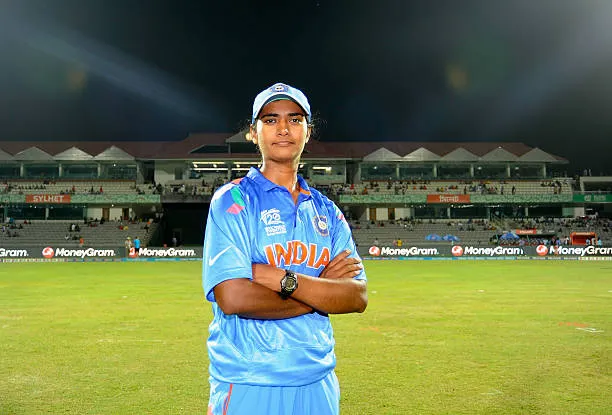
Veteran Indian cricketer Shikha Pandey has announced her departure from Goa cricket after an extraordinary 19-year stint, marking the end of an era for the state’s women’s cricket setup. Known for her all-round abilities and leadership, Shikha’s exit leaves a significant void in the team she has represented since her teenage years.
Shikha began her journey with Goa at just 15, quickly rising through the ranks to become one of the most respected names in Indian women’s cricket. Her biggest milestone came when she became the first woman from Goa to represent the Indian national team, a feat that inspired a generation of young girls in the state. Over nearly two decades, she consistently delivered match-winning performances, both with the bat and the ball, while also guiding and mentoring younger players.
Her departure is not the end of her cricketing career—rather, it signals a fresh start. Shikha is expected to join Baroda, a team with a strong cricketing infrastructure and a rich history in domestic competitions. This move is seen as a strategic decision to ensure she continues playing at a high level while also contributing her wealth of experience to a squad that is already competitive on the national stage.
For Goa, losing Shikha is more than just losing a top player; it is losing a leader, mentor, and a symbol of what is possible with determination and discipline. She has often spoken about the importance of improving infrastructure, increasing exposure, and providing financial security to women cricketers—issues she championed both on and off the field. Her voice and presence in Goa’s dressing room will be sorely missed.
In Baroda, Shikha will find a team that offers competitive opportunities, better facilities, and a platform to continue pushing boundaries in the domestic circuit. Her move could also be pivotal in helping Baroda’s younger players grow, as her experience in high-pressure international matches brings a dimension that cannot be taught in training alone.
Shikha’s career is a testament to perseverance and adaptability. From a small-town girl making her debut for Goa to becoming an Indian international and now taking on a new challenge with Baroda, her journey mirrors the evolution of women’s cricket in India—one where talent is no longer confined by geography.
As she embarks on this new chapter, Shikha carries with her the pride of Goa and the expectations of Baroda. Her move serves as a reminder that in cricket, as in life, growth often means embracing change. For Goa, her departure is a bittersweet farewell; for Baroda, it is the arrival of a proven match-winner and leader ready to script yet another success story.