

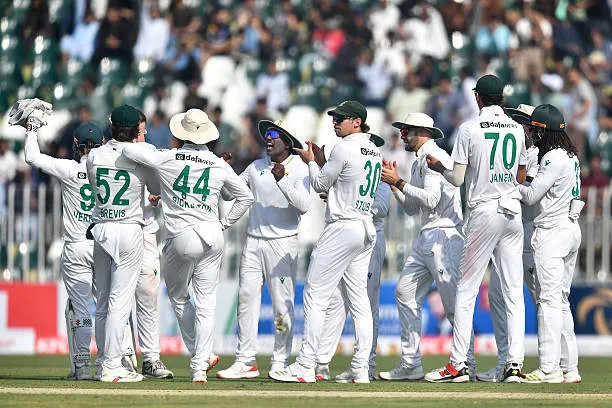
South Africa walk into the second Test in Guwahati with a chance to break a quarter-century drought — and they know the window is real, not theoretical. The first Test showed enough structural cracks in India’s game for the visitors to believe they can take the series, something no South African side has managed on Indian soil since 2000. That context adds an edge to a contest already heavy with consequence for both teams.
The biggest talking point in the build-up is South Africa’s discipline. Their bowlers forced India into mistakes that rarely occur at home: loose leaves outside off, tentative footwork against seam, and an inability to transition from survival to scoring. South Africa exposed India’s vulnerability when the pitches offer early movement, and they’ll want similar surfaces in Guwahati. Their seamers, especially those attacking the stumps, made India look far less immovable than usual.
The batting unit, often the weaker link abroad, earned credibility too. Measured starts, a refusal to let Ravichandran Ashwin settle, and selective aggression put India under pressure. If they replicate that temperament — rotating strike, attacking the straight boundaries, and denying India quick wickets — the hosts will inevitably feel the squeeze.
India, meanwhile, know the narrative and won’t like it. They’re usually ruthless after a home defeat, but this time the criticism has teeth. The top order’s inconsistency, coupled with an overdependence on moments of brilliance, has left them exposed. They will demand far more steel from their senior batters, who simply cannot afford soft dismissals again. The lower-middle order dug India out of trouble before, but banking on comebacks every match is a fragile plan.
Bowling is the area where India expect an immediate bounce-back. Their spinners were economical but not incisive enough, failing to create sustained pressure or generate breakthroughs when South Africa consolidated. In Guwahati, India need sharper spells, not just containment. The conditions may offer more grip, but the intent has to shift: fewer defensive lines, more probing angles, and far more coordinated attacking fields.
South Africa’s confidence is rooted not in emotion but in structure. Their plans in the first Test were simple and repeatable: hit the deck hard, bowl at the stumps, force India to drive, neutralise spin by playing late, and attack the gaps India leave when they chase wickets. Nothing about those methods is a one-off, and that’s what makes them dangerous.
The psychological factor matters too. When a team hasn’t won a series in a country for 25 years and suddenly finds the host looking unsettled, belief hardens quickly. South Africa can smell that vulnerability. They know taking the second Test kills the contest outright and becomes a statement victory — not just for the players but for the identity of a side evolving past old limitations.
India aren’t done, but they are under genuine pressure. South Africa, for the first time in decades, have the opportunity, the balance, and the momentum to break a 25-year hoodoo. How both teams handle that weight in Guwahati will decide whether this becomes a historic moment or another chapter of regret.
12BET Shortlisted for Sportsbook Operator of the Year at SBC Awards 2025