

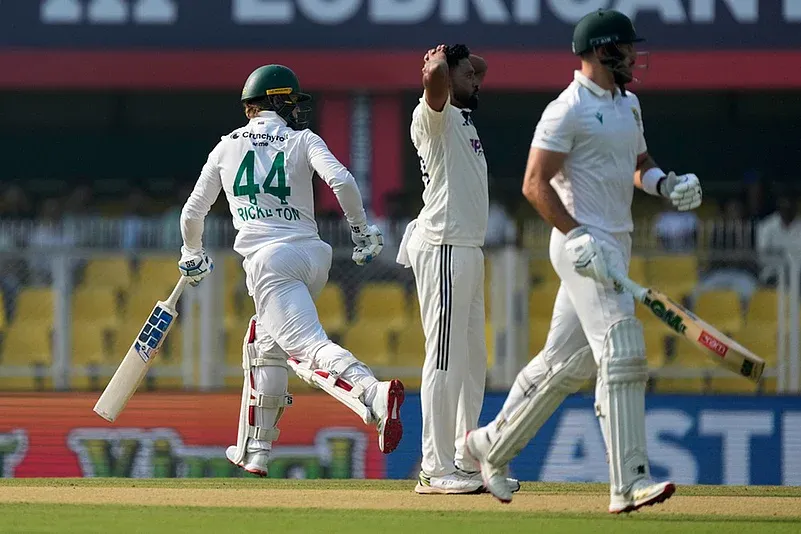
Day 1 of the second Test in Guwahati delivered one of those unusual cricketing quirks that statisticians love and teams hate. South Africa’s top four — Aiden Markram, Ryan Rickelton, Temba Bavuma, and Tristan Stubbs — all made promising starts, each scoring at least 35, yet not one of them got to a half-century. It’s an extremely rare occurrence in Test cricket, and this particular combination of numbers is believed to be a first: every top-four batter crossing 35, none reaching 50.
The day began brightly for the visitors. Markram and Rickelton put on an 82-run stand, batting with composure and capitalising on a fairly generous morning surface. Both looked set for something bigger. Markram played confidently on his way to 38 before losing his wicket at a moment when he should have pushed on. Rickelton followed soon after for 35, undone after doing most of the hard work.
Bavuma and Stubbs then picked up the innings with an 84-run partnership for the third wicket. Bavuma, known for his grit, managed 41 but once again fell in that frustrating in-between zone. Stubbs came closest to breaking the pattern, scoring 49 with a mix of discipline and aggression. But even he couldn’t push beyond the psychological barrier, dismissed agonisingly short of what would have been a deserved fifty.
By stumps, South Africa reached 247 for 6 — a total that looks decent on paper but carries the unmistakable scent of opportunity lost. India’s attack, led by Kuldeep Yadav with three wickets, kept prising out batters just when they seemed set. The surface never looked treacherous; the dismissals came more from lapses in concentration than unplayable deliveries.
The statistical oddity is more than just a curiosity. In Test cricket, starts are currency — and converting them is what separates competent innings from commanding ones. For a batting lineup, especially in the top four, to repeatedly get in and repeatedly fall short is both impressive and exasperating. It shows resilience, but it also highlights a lack of ruthlessness that top teams rely on to build match-shaping totals.
Had even one of the top four gone on to post a big score, South Africa might have ended the day in complete control. Instead, they left the door open for India, who managed to keep the innings from exploding despite long stretches where the visitors seemed on top. The missed conversions also put pressure on the lower order to rescue the innings on Day 2 — something they would eventually respond to, but that doesn’t erase the frustrations of Day 1.
In the end, South Africa walked off with a platform, but also with a record they would rather avoid. Four batters got themselves in, four batters fell before fifty, and a strange little chapter was added to Test cricket’s long history of statistical quirks.
12BET Shortlisted for Sportsbook Operator of the Year at SBC Awards 2025