

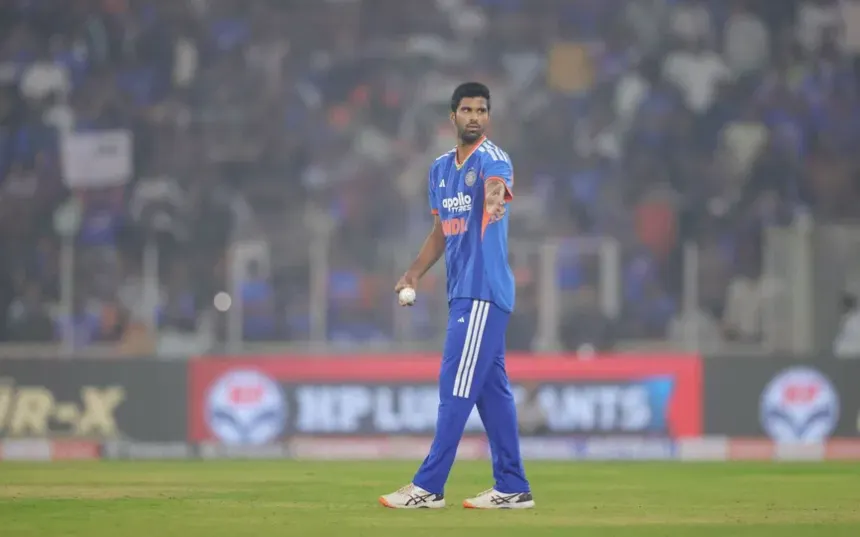
India’s injury concerns in the ongoing ODI series against New Zealand deepened after Washington Sundar was ruled out due to a rib injury, forcing the team management to make another adjustment mid-series. Young all-rounder Ayush Badoni has been named as Sundar’s replacement, starting from the second ODI, in a move that reflects both necessity and long-term planning.
Sundar’s injury is understood to have occurred during the opening match or in the immediate lead-up, with medical assessments confirming that the rib issue would worsen if he continued playing. Given India’s packed calendar and Sundar’s importance across formats, the team opted for caution rather than risking a prolonged layoff. Rib injuries, particularly for all-rounders who bowl and bat, require careful handling due to the strain involved in twisting and impact movements.
From a team-balance perspective, Sundar’s absence is significant. His value lies in his versatility — a reliable off-spinner who can operate in the powerplay and middle overs, combined with calm, lower-order batting. In ODIs, he often serves as a control option with the ball, allowing captains flexibility in managing faster bowlers. Losing that balance forces India to slightly rethink their combinations.
Ayush Badoni’s inclusion offers a different skill set. While not a like-for-like replacement, Badoni brings batting depth and part-time bowling, along with a reputation for composure under pressure. He has impressed consistently in domestic cricket and franchise tournaments, particularly with his ability to finish innings and adapt to match situations. His calm temperament has been frequently highlighted by coaches and senior players.
The call-up represents a significant opportunity for Badoni. Breaking into the national ODI setup is rarely straightforward, especially mid-series, but such moments often define careers. While expectations will be measured, a solid contribution — even in a supporting role — could strengthen his case for future selections, especially as India continue to broaden their white-ball talent pool.
For the team management, the decision also signals trust in younger players to step up when injuries strike. Rather than reshuffling the existing XI heavily, India have chosen to plug the gap with a fresh option, keeping the core structure intact. This approach aligns with India’s broader strategy of building depth ahead of major tournaments.
Sundar’s absence also adds to a growing list of injury-related adjustments for India in the series. With multiple players either sidelined or returning from fitness concerns, workload management remains a key theme. The medical reminder is clear: depth is no longer a luxury but a necessity in modern international cricket.
From New Zealand’s perspective, Sundar’s unavailability slightly alters their planning. His ability to restrict scoring and break partnerships often requires targeted batting strategies. Badoni, on the other hand, may be approached differently, potentially shifting how New Zealand pace their innings.
As for Sundar, the focus now turns to recovery and rehabilitation. The Indian camp remains optimistic that the injury is not long-term, and that he will return fit for upcoming assignments. Protecting his availability for future series and tournaments appears to be the priority.
For now, the spotlight shifts to Ayush Badoni. With India already showing confidence in their bench strength, this series presents him with a chance to make a meaningful first impression — and potentially turn an injury setback into a stepping stone for his international career.
12BET Shortlisted for Sportsbook Operator of the Year at SBC Awards 2025