

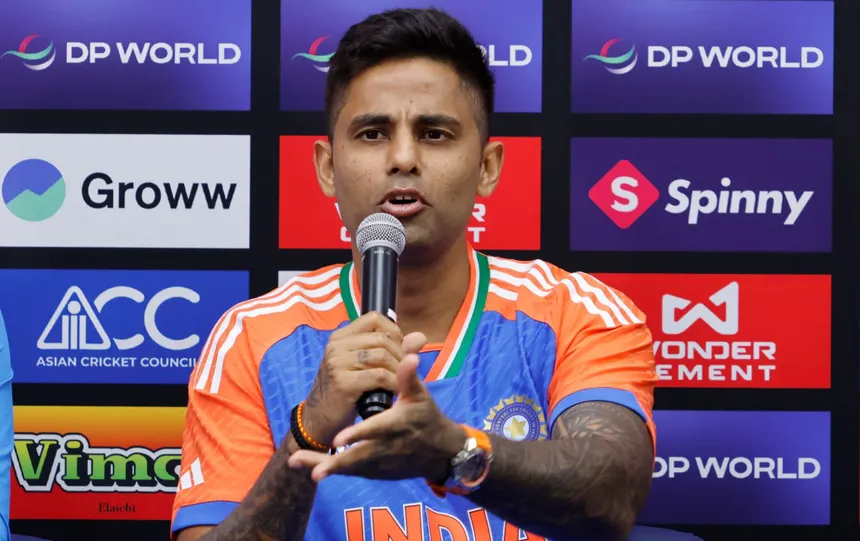
India captain Suryakumar Yadav sparked headlines and debate after India’s commanding six-wicket win over Pakistan in the Asia Cup Super Four match, saying he no longer considers Pakistan a “real rival.” His bold statement came after India chased down Pakistan’s 172 with seven balls to spare, powered by a 105-run opening stand from Abhishek Sharma and Shubman Gill.
Speaking at the post-match media interaction, Yadav argued that the term “rivalry” only applies when results are balanced and competitive. “For it to be a rivalry, you need a contest that goes both ways. Right now, it feels one-sided,” he said, pointing to India’s dominant record over Pakistan in recent T20Is. Over the past 15 encounters between the two teams in the format, India has won 11, with Pakistan managing just three victories and one tie.
Yadav’s remarks were not merely statistical but symbolic, signaling a shift in how the Indian camp views their arch-rivals. The India-Pakistan clash has long been considered one of cricket’s fiercest match-ups, attracting global viewership and intense emotions on both sides of the border. Yet, with India enjoying a clear upper hand in recent years, Yadav suggested that the narrative around the fixture may need to evolve.
The comment comes against a backdrop of heightened off-field drama, including protests from Pakistan’s board over officiating, the controversial handshake row, and growing tension around player interactions. Despite the surrounding noise, India’s players appeared focused and clinical on the field, and Yadav’s words reflected that confidence.
Reaction to his statement has been mixed. Indian fans largely celebrated the comment as a sign of dominance, applauding the team’s consistent superiority over Pakistan in major tournaments. Analysts in India echoed the view that “rivalry” should imply unpredictability, and at present, India’s win record has made the result feel more of a foregone conclusion.
In Pakistan, however, the reaction was predictably sharper. Former players and media outlets criticized Yadav’s comments as disrespectful, arguing that the India-Pakistan rivalry is defined by more than just recent results. They insisted that matches between the two nations continue to carry enormous weight, with high pressure and unique emotional stakes.
Yadav’s statement could also add fuel to Pakistan’s motivation heading into future matches. With the Asia Cup still ongoing and potential meetings in ICC tournaments later this year, Pakistan’s players may treat his words as a challenge to restore parity and reassert competitiveness.
Regardless of differing opinions, Yadav’s declaration underscores India’s current confidence and their hold over the fixture. Whether Pakistan can shift that narrative and make future contests more even will determine if this rivalry regains its balance — or if it continues to be seen, as Yadav put it, as a one-sided affair rather than a true sporting rivalry.
12BET Shortlisted for Sportsbook Operator of the Year at SBC Awards 2025