

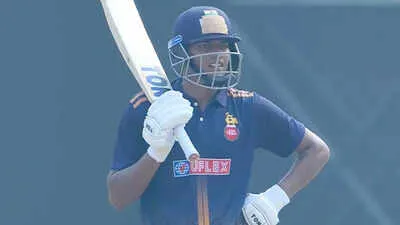
Tamil Nadu produced a composed and disciplined all-round performance to defeat Rajasthan by 22 runs in a high-stakes Syed Mushtaq Ali Trophy 2025–26 knockout encounter, successfully defending a competitive total of 171. The win highlighted Tamil Nadu’s experience in pressure games and their ability to execute plans with precision when margins are tight.
Batting first, Tamil Nadu approached the innings with clarity. Rather than chasing reckless acceleration, their top order focused on building a stable base through sensible shot selection and smart strike rotation. The powerplay provided momentum without sacrificing wickets, allowing the middle order to bat with freedom later in the innings. That balance proved crucial in pushing the total beyond the 170 mark.
The middle overs were handled with maturity. Tamil Nadu’s batters targeted specific bowlers, avoided unnecessary risks, and kept the scoreboard moving even when boundaries dried up briefly. This ensured Rajasthan never fully seized control with the ball. In the death overs, Tamil Nadu capitalised on fielding lapses and missed lengths, squeezing out valuable runs that ultimately made the difference between a defendable score and a vulnerable one.
Rajasthan’s chase began with intent, reflecting the urgency of a knockout match. Their openers looked to capitalise early, attempting to offset the asking rate before Tamil Nadu’s bowlers could settle. However, Tamil Nadu struck at crucial moments, ensuring Rajasthan never enjoyed a sustained period of dominance.
The turning point came in the middle overs, where Tamil Nadu’s bowling discipline stood out. Rather than hunting wickets with loose deliveries, the bowlers focused on hard lengths, tight lines, and well-protected boundaries. Singles were allowed, but big shots were consistently denied. This approach steadily increased the required run rate and forced Rajasthan’s batters into riskier strokes.
Tamil Nadu’s spinners played a key role in choking the chase. Bowling into the pitch with subtle variations, they disrupted Rajasthan’s timing and drew mistimed shots. Even when Rajasthan attempted to launch counterattacks, the field placements were sharp and proactive, cutting off scoring options and applying constant pressure.
As the chase moved into the final phase, Rajasthan needed a strong finish, but Tamil Nadu’s calm execution at the death sealed the outcome. Yorkers, slower balls, and wide lines were used effectively, preventing clean hitting and triggering wickets at decisive moments. The run rate spiralled beyond reach, and Rajasthan’s resistance faded.
Defending 171 in a knockout game demands not just skill but mental toughness, and Tamil Nadu displayed both. Their bowlers stayed composed despite occasional boundaries, immediately regrouping rather than losing shape. That composure reflected a side well-versed in high-pressure domestic cricket.
For Rajasthan, the defeat marked a frustrating end to their campaign. While they showed flashes of aggressive intent, the inability to build partnerships and adapt to Tamil Nadu’s disciplined bowling proved costly. In knockout cricket, small lapses often have big consequences, and Rajasthan were unable to recover once the game slipped out of their grasp.
For Tamil Nadu, this victory reinforces their reputation as a formidable knockout side. The blend of structured batting, tactical bowling, and sharp game awareness makes them a serious threat as the tournament progresses. Defending 171 with authority sends a clear message — Tamil Nadu are peaking at the right time and are well equipped for the challenges ahead.
12BET Shortlisted for Sportsbook Operator of the Year at SBC Awards 2025