

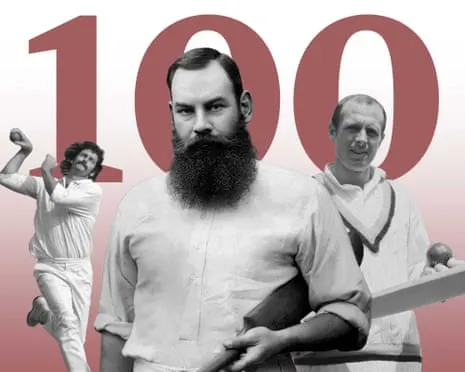
In a landmark initiative for cricket history, The Guardian has launched a project ranking the 100 greatest players in the history of the men’s Ashes — a rivalry spanning 143 years of Test cricket between England and Australia. The list, released in November 2025, was compiled by a 51-member expert panel featuring former cricketers, coaches, journalists, historians, and commentators from both nations. The idea was to celebrate the rivalry’s finest performers across eras while sparking debate about how greatness is defined in cricket’s most storied contest.
Each panelist was provided a long list of 150 names but was free to nominate additional players. They were asked to select their top 50, assigning 50 points to their number one pick and one point to their 50th. The final rankings were determined by total points, with ties broken by the number of votes received and the highest individual ranking. To prevent modern bias, three balancing rules were imposed: each panelist had to select at least fifteen players from each country and include a minimum of five players from each of five time periods — pre-World War I, interwar years, 1945–74, 1975–99, and 2000 onwards. In total, 2,550 individual votes were cast, creating one of the most comprehensive datasets ever assembled on Ashes history.
The Ashes has always been more than just a cricket series — it is a cultural rivalry that has defined both nations’ cricketing identities. From WG Grace and Victor Trumper to Don Bradman, Ian Botham, Shane Warne, and Ben Stokes, the series has showcased cricket’s evolution and enduring appeal. The Guardian described its ranking as “a snapshot in time,” acknowledging that no list could ever be definitive. Comparing a 19th-century amateur batsman on uncovered pitches to a 21st-century professional armed with modern gear and data is an impossible science, but the spirit of the exercise lies in reflection rather than precision.
The release of the list was structured over several days, unveiling players in segments: 100 to 71 first, then 70 to 41, followed by 40 to 11, and finally the top ten. This staggered rollout built anticipation and encouraged debate, with fans and experts eagerly weighing in on omissions, placements, and unexpected inclusions. Some choices reignited long-standing discussions about whether consistency outweighs match-winning brilliance, or whether impact in key series should trump career longevity.
The Guardian’s editorial team emphasized that this list was not about crowning an absolute best but about honoring the figures who defined generations of Ashes cricket. It celebrates the artistry of batsmen who stood tall in hostile conditions, the fire of fast bowlers who broke partnerships, and the resilience of captains who carried the weight of national pride.
Beyond statistics, the project captures the human stories behind cricket’s oldest rivalry — tales of courage, redemption, and brilliance that have shaped both nations’ sporting psyches. Whether or not fans agree with the final order, the Ashes 100 serves as a powerful reminder that greatness in cricket is as much about legacy and influence as it is about numbers. In revisiting the past, The Guardian has reignited the essence of the Ashes: fierce competition, deep respect, and an unbroken link between the heroes of yesterday and those of today.
12BET Shortlisted for Sportsbook Operator of the Year at SBC Awards 2025