

TV Umpires attracting wrong headlines in Women’s World Cup as lack of experience with DRS protocols led to poor decisions.
TV Umpires slip-ups come under the scanner at Women’s World Cup.
In its first two-and-a-half weeks, the Women’s World Cup 2025 has seen a number of controversial calls, raising questions about umpiring standards. The decision review system (DRS), which is only occasionally utilised in the women’s game, has been the site of the most glaring errors. This has brought attention to the umpires’ familiarity with DRS protocols.
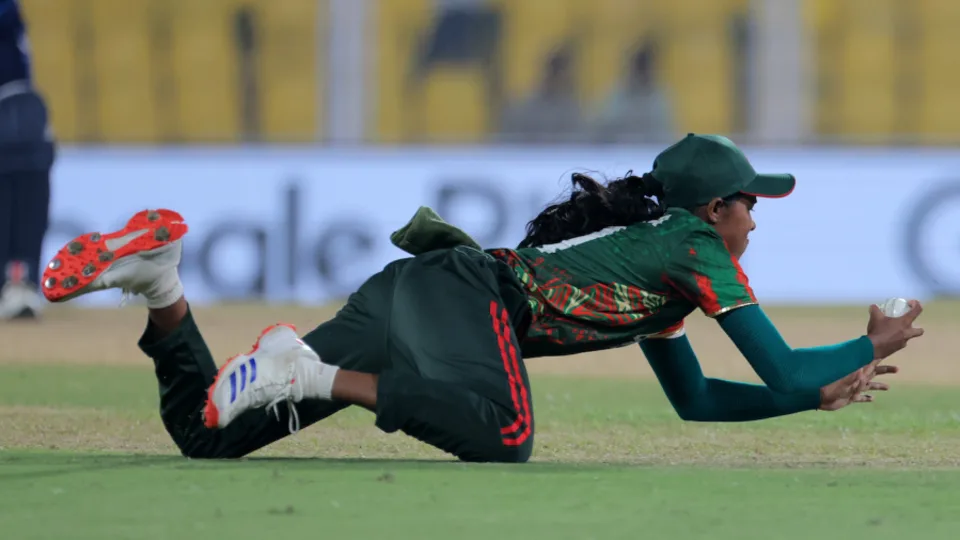
Shorna Akter’s poor catch during Heather Knight’s three reprieves during the England vs. Bangladesh game was one of the most noteworthy errors. With England chasing 179 at the time, Knight chipped legspinner Fahima Khatum to Shorna at cover on 13.
On the basis of “inconclusive” evidence, TV umpire Gayathri Venugopalan decided against Knight’s wish to leave. The third umpire, who felt the ball hit Knight’s pad through to the wicketkeeper, overruled the caught-behind ruling that had been made earlier on the pitch.
“I did the presentation that evening and I put it to Heather Knight, and she did not sit on the fence at all,” Nasser Hussain, who is working as a broadcaster at the tournament, said on *JioStar pressroom. “She said, ‘well, I thought it was out, I was walking off’. There were other lbw reviews as well and Heather said, ‘I’ve never been out so many times in a cricket match.’ She then got 60 or 70 not out [79 not out] to win the game, and that really hurts you.”
Muneeba Ali’s run out during the India vs. Pakistan game in Colombo was another event. The TV umpire initially gave Pakistan’s opener, Muneeba, not-out on the big screen, but then reversed that call to “out.”
In that instance, TV umpire Kerrin Klaaste initially ruled it not-out lbw without reviewing all of the available evidence. However, after seeing more film that revealed there had also been a run-out choice to make, she altered her mind. Although the right choice was ultimately made, there was a great deal of misunderstanding during the process.
India then reviewed a not-out lbw judgement against Sune Luus during their match against South Africa. Even though a side-on review revealed a respectable space between the ball and bat at the moment of the murmur, the third umpire, Candace la Borde, decided that a murmur on Ultra Edge was sufficient to signal an under-edge onto the pad. Luus did not leave.
Third umpire Jacqueline Williams checked the catch made by Sneh Rana at point to dismiss Alyssa Healy during the India-Australia match. She commented, “I can see the ball touching the ground,” before changing her decision and declaring the catch clean.
Additionally, a higher proportion of on-field rulings have been overturned through reviews than is often observed at large international tournaments. There have been 25 successful overturns of on-field judgements in 36 innings at this World Cup, which translates to an overturn rate of 0.67 per innings. The men’s ODI World Cup in 2023, the final World Cup to be held in Asia, had a successful overturn rate of 0.46 per innings.
The ICC did not disclose whether teams themselves had voiced concerns about umpiring errors or the umpires’ relative lack of experience with DRS. Sean Easey, the umpire manager for the ICC, has visited a few locations throughout 2018 World Cup.