

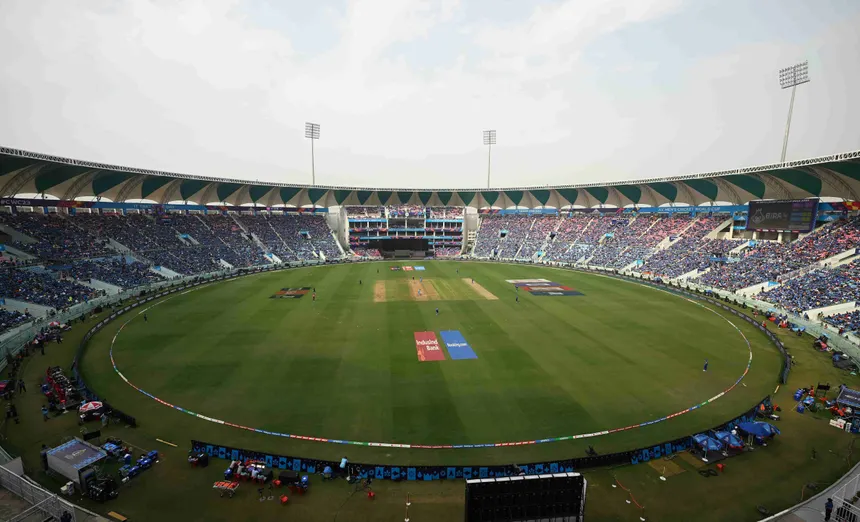
Kanpur’s massive 197-run victory over Hardoi in the ongoing Uttar Pradesh T20 Inter-District Championship has triggered serious discussion about the competitive imbalance in the state’s domestic cricket structure. The one-sided contest, played earlier this week in Kanpur, wasn’t just a win — it was a statement about the uneven development of cricketing infrastructure and talent across the state’s districts.
Batting first, Kanpur posted a mammoth 233 for 6 in their allotted 20 overs. Opener Jai Valecha smashed 77 off 41 balls, while Gopal and Ashish added crucial runs in the middle order to ensure that Kanpur’s total was well beyond par. Their approach combined clean hitting with disciplined shot selection, demonstrating a level of preparation rarely seen at this stage of district cricket.
Hardoi, in contrast, appeared completely out of depth. Their chase disintegrated almost immediately — losing wickets in clusters and eventually folding for a mere 36 runs in just 11.2 overs. Vikas Bhartiya was the wrecker-in-chief, claiming 5 wickets for 13 runs, while Shailendra Shukla chipped in with a miserly spell that left Hardoi’s middle order clueless. The defeat by 197 runs — an extraordinary margin in a 20-over contest — revealed a gulf not just in skill but in competitiveness, fitness, and mental preparation.
District-level cricket in Uttar Pradesh has long been the breeding ground for national and state-level talent. Cities like Kanpur, Lucknow, and Meerut have historically produced technically sound players with exposure to better coaching systems. In contrast, smaller districts such as Hardoi, Bahraich, or Budaun often struggle due to poor infrastructure, limited access to turf wickets, and sporadic exposure to competitive cricket. This disparity, when translated to matches, manifests as humiliating scorelines like this one.
The Kanpur-Hardoi result also brings into focus a larger issue: the widening performance gap within grassroots cricket in India’s biggest state. Uttar Pradesh, despite being one of the country’s largest cricketing pools, continues to depend heavily on players from only a handful of urban centers. District boards with fewer resources remain unable to bridge the gap in player development, leading to predictable and lopsided outcomes in tournaments meant to foster competitiveness.
Experts and local coaches believe the solution lies in structural reform. Introducing tiered divisions within inter-district tournaments could ensure that evenly matched teams compete against one another. Additionally, centralized training camps and exchange programs can help raise the standard of players from less developed districts. Without these measures, matches like Kanpur vs Hardoi risk becoming routine blowouts rather than competitive showcases.
While Kanpur deserves full credit for its commanding performance — built on discipline, fitness, and depth — the bigger takeaway from this result isn’t their brilliance but the exposure of systemic weaknesses in Uttar Pradesh’s cricket ecosystem. A 197-run win in a T20 fixture shouldn’t happen in a healthy, balanced competition.
If the Uttar Pradesh Cricket Association aims to produce talent from every corner of the state, results like this should serve as a wake-up call. Until the competitive foundation at the district level is rebuilt, cricket in UP will remain divided between a few powerhouses — and the rest, left chasing from miles behind.
12BET Shortlisted for Sportsbook Operator of the Year at SBC Awards 2025