

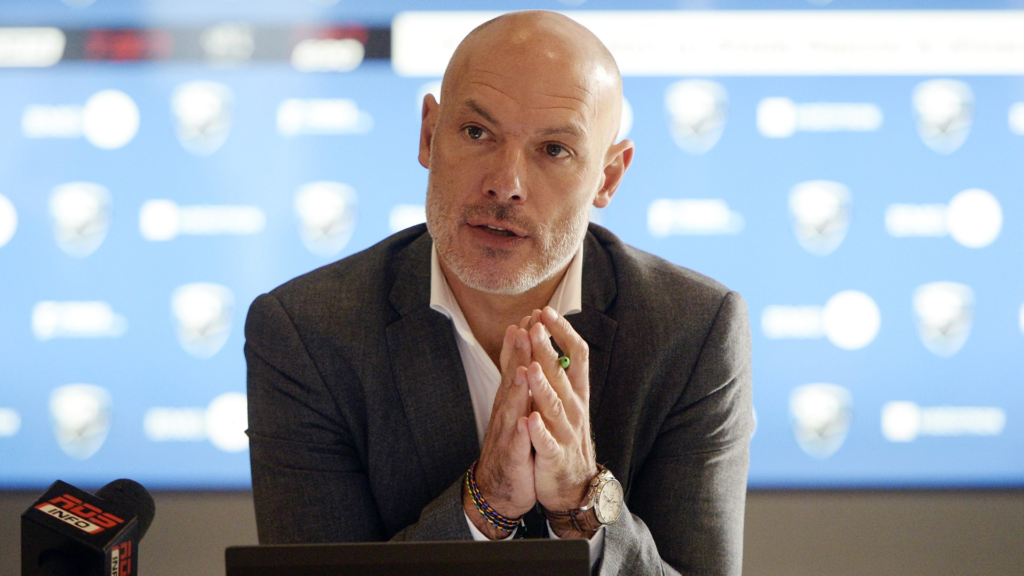
Webb warns about awarding more penalties for holding and clinging to players this season in the Premier League.
After telling referees to try again to solve one of the Premier League’s most intractable issues—players clinging to one another in the penalty area—Howard Webb has cautioned supporters that they should anticipate seeing more penalties this season.
Professional Game Match Officials (PGMO) have provided referees with new holding guidelines in an effort to reduce the frequency of instances in which an opponent obstructs a player’s movement. Leading players and club officials were consulted, and they all voiced their disapproval of the practice.
“The feedback that we had is that there’s just a few too many examples of players clearly pulling people back, impacting their ability to move to the ball, or some clear extreme actions are not being penalised,” said Webb, the chief referee officer, before the Premier League season starts on Friday night. “They’re the ones I expect us to catch. Therefore I would expect this time next year for there to have been a few more penalties given for holding offences than what we’ve seen this year. But not a huge swing of the pendulum.”
The updated guidelines give referees more leeway to evaluate holding incidents and determine how harsh or extreme they may be. A referee is obliged to take into account a number of factors, including as how long a player is restrained, how much it affects their mobility, how the opponent tries to obstruct movement, and whether both arms are being utilised.
There have been previous promises of a crackdown on holding, but they haven’t had any significant effect. According to Webb, the secret will be to implement any changes gradually and steadily.
“This is not meant to be a six-week campaign, August and September, then we forget all about it,” he said.
“If we went in like a steam train and gave every little bit of sort of contact then it would tell you it would be a six-week campaign. Because we would get told very quickly to ease off from what we’re doing. We have to take the game with us and we have to be credible. We have to identify those situations that do fall in line with the feedback that we had.”