

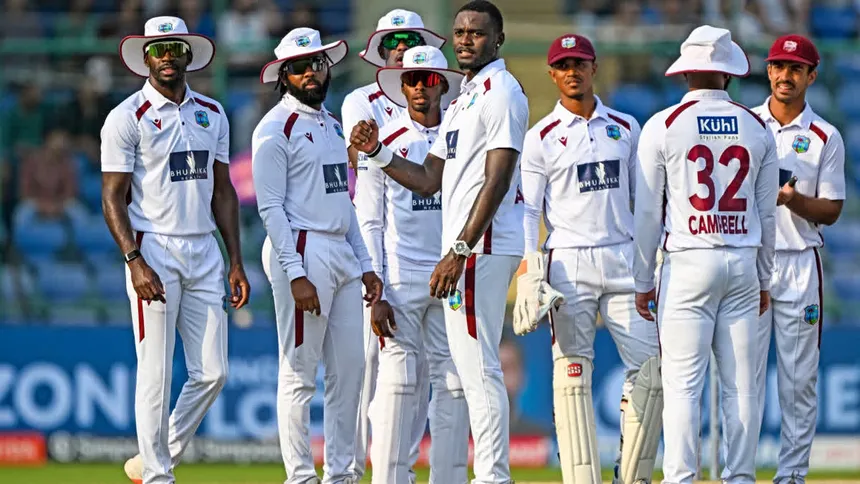
The opening Test of the 2025–26 series between West Indies and New Zealand has been a challenging start for the Caribbean side, highlighting both flashes of resistance and the gaps that have allowed New Zealand to seize early control. On Day One, the Windies bowlers struck early and tested the New Zealand top order, but the team ultimately conceded 231/9 by stumps, after Kane Williamson’s composed fifty and a crucial lower-order stand with Michael Bracewell stabilized the innings.
The Windies’ bowling unit showed intent, particularly in the opening spells where disciplined seamers leveraged movement off the pitch. Alzarri Joseph and Oshane Thomas consistently hit the corridor of uncertainty, forcing New Zealand batters into careful footwork and cautious shot selection. Their ability to extract bounce and maintain pressure through disciplined lines and lengths reflected the depth of talent in the pace department. However, the Windies were unable to capitalize fully on the early breakthroughs. Occasional lapses in fielding and an inability to sustain partnerships in the middle overs allowed Williamson and Bracewell to rebuild effectively, frustrating the visitors’ initial momentum.
On Day Two, West Indies’ batting came under significant pressure. The home team posted a modest first-innings total of 167, with only Shai Hope (56) and Tagenarine Chanderpaul (50-plus) providing resistance. While these two showcased composure and technical skill against New Zealand’s disciplined seam attack, the lack of support from the rest of the batting lineup meant the innings collapsed quickly once the set batsmen were dismissed. The tail, in particular, was unable to contribute meaningful runs, highlighting a recurring problem in West Indies cricket: reliance on a few key performers rather than consistent contributions across the lineup.
Jacob Duffy’s five-wicket haul (5-34) epitomized the challenge the Windies faced. New Zealand’s bowlers combined control and variation to dismantle the Windies order, exploiting gaps in technique and temperament. The Caribbean side’s inability to withstand sustained pressure underscored the difficulty of touring New Zealand, where disciplined seam bowling and patience are often decisive.
Despite these setbacks, the Windies showed glimpses of their potential. Shai Hope’s fifty and Chanderpaul’s patient innings demonstrated that the top and middle order possess the ability to anchor innings under pressure. Their application underlines the strategic importance of partnerships in Test cricket, especially when chasing or attempting to restrict a lead in foreign conditions. These contributions, while ultimately insufficient to turn the match in their favor, reflect the foundation on which the team can build.
Looking ahead, the West Indies will need to focus on batting depth and consistency to compete effectively. The first innings highlighted the importance of lower-order contributions and the necessity for partnerships beyond the top three or four batters. Bowling plans will also need to adapt, with strategies that maintain pressure without relying solely on individual brilliance.
In summary, the opening Test exposed both strengths and vulnerabilities of the West Indies. While the pace attack showed skill and the top order exhibited resilience, the lack of depth in batting and the inability to maintain partnerships allowed New Zealand to take control. The Caribbean team will need to address these areas to mount a meaningful challenge in the remainder of the series.
12BET Shortlisted for Sportsbook Operator of the Year at SBC Awards 2025