

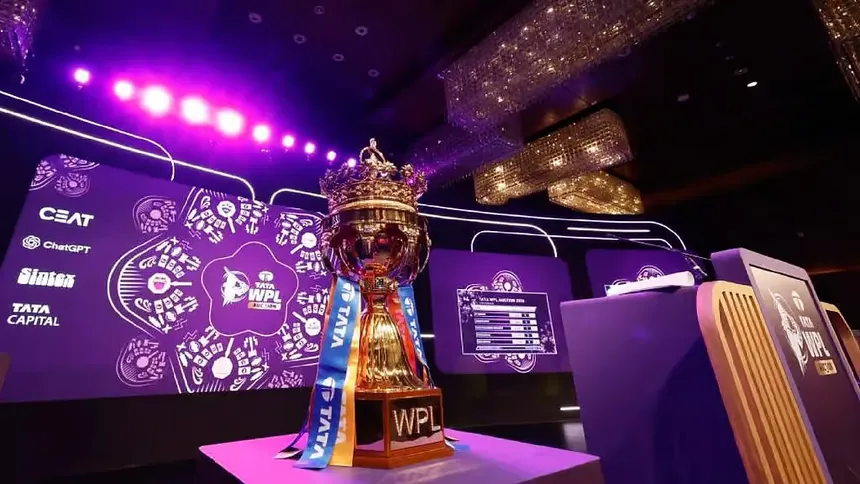
The Women’s Premier League has reached a point where the auction isn’t admin, it’s ideology. The Women’s Premier League 2026 mega auction is underway, and it’s rewriting how teams gamble, spend, and structure power. This is squad building in the era where brand value meets cricketing value — and for once, the money isn’t the story. The story is what the money is buying: intent, flexibility, durability, momentum and leverage in 20 overs.
In T20 cricket, auctions used to reward superstardom. Now they reward utility, adaptability, and upside across match phases. Teams like the Mumbai Indians Women and Delhi Capitals Women aren’t just collecting names anymore, they’re collecting roles — powerplay accelerators, middle-over anchors who refuse to stall, spin bowlers who hunt wickets not containment, and pacers with overs that feel like contractual pressure, not exhibition bowling. That evolution is obvious in how bidding wars are shaping up. Contracts are hitting career-making valuations because franchises now want players who can solve a 120-ball equation under heat.
A mega auction magnifies national and international hierarchies. It exposes which teams prepared scouting pipelines and which teams prepared press releases. With purse strategies climbing into new financial layers, South Africa’s recent spin command by bowlers like Simon Harmer and pace leverage from Marco Jansen against India suddenly looks less mysterious. National pipelines feed franchise ecosystems, and franchise ecosystems amplify national psychology. In the WPL, teams are now trying to build what South Africa built quietly at home: pressure maturity, tactical clarity, and players who look comfortable being uncomfortable.
Cricket in 2026 isn’t about hitting a six anymore. It’s about hitting it at 18.1 overs when the required run rate is 11.2 and three fielders are on the boundary. It’s not about taking a wicket anymore. It’s about taking it at 5.2 overs so the opponent never weaponizes the powerplay. Auctions love players who love that truth. That’s why bid rooms are exploding. Big names and household internationals like the Ellyse Perry and Harmanpreet Kaur are pulling intense valuations not because of nostalgia, but because their game translates across formats, moments, and stadium noise.
The rise of Associate women’s cricket is another invisible subplot here. UAE players like Vaishnave Mahesh recently showed that matches of small totals demand crisp pressure design rather than lazy stardom dependency. That’s now echoing in auction strategy. Franchises want players who can inflate 18 balls into momentum, who can turn 73 all out into chessboard dominance, who can chase 74 like a win probability timeline rather than a practice net, and who understand that T20 cricket’s smallest margins hold the biggest psychological tax. Associate cricket is forcing full-member nations to learn the brutal minimalism of pressure. That minimalism, blended with talent, now sells for crores.
India’s domestic cricket economy leads global cricket monetization, but the coaching narrative India floated in Tests — transition, youth, patience, time — is being ruthlessly invalidated by this auction. The WPL teams didn’t ask for time to mature. They asked for results to mature inside 20 overs. That tension is deliberate. League cricket demands that players don’t just progress, they pay rent on progress. Every ball faced and every over bowled is either equity or liability.
The auction is also exposing the second truth of franchise cricket: depth > peak. A team doesn’t need seven superstars. It needs seven reliable problem solvers and four high-upside match breakers. You need one batter who guarantees 38 in 24 balls at strike rate control, one spinner who can bowl 4 overs at under 6.5 economy while hunting wickets, and a pacer who can defend 12 off the final over without bowling emotional length. This auction rewards algorithms of stability first, superstardom second, risk third, repairability fourth.
Five years ago, domestic women’s leagues were considered just a calendar event between T20 World Cups. Today, auctions are programming national future squads through domestic audit tunnels. Players who succeed here will succeed anywhere — because pressure translation is universal. South Africa proved it in Tests. UAE proved it in Associate chases. Now WPL franchises are paying for it in bidding rooms. India may own the hosting ecosystem, but the cricketing ideology space is now open-source. Whoever designs pressure best wins international weekends and domestic Wednesday games alike.
12BET Shortlisted for Sportsbook Operator of the Year at SBC Awards 2025